
ATLAS:
the Automatic Targeting
Laser Ablation System
A first-of-its-kind laser solution for superficial bladder cancer.
ATLAS handles the complexity. You handle the procedure.
Our laser technology is currently in development. This device is investigational only and is not approved for commercial use.
Pioneering assitive laser technology to keep bladder cancer care out of the OR
Procedure-room-based care calls for treatment options that prioritise predictable outcomes, support patient comfort, and reduce risk of minor complications. The innovative mechanism of action and built-in features of ATLAS are being designed for procedure-room settings.*
ATLAS handles the complexity
You handle the procedure
Many conventional medical lasers used for bladder cancer treatment were originally created for general surgical use, or for procedures such as laser lithotripsy or prostate surgery.
These laser types can require near-contact with the treatment area, and have built-in, manually-controlled settings that aren't specialised for bladder cancer. This places the burden on the operator to position the laser precisely and steadily, and adjust settings for the chosen laser system and procedure.
Our goal is to create a category-defining laser platform, with embedded, real-time assistive capabilities to support the operator during non-OR procedures.
The ATLAS design includes automatic controls and real-time visual guidance, intended to help reduce technical complexity, ergonomic strain, and cognitive load for clinicians.*
The ATLAS design
ATLAS is being designed to detect tissue with photonic precision, direct energy with automatic controls and guidance, and deliver photocoagulation treatment, without the need for general anaesthesia.
Our laser technology is currently in development. This device is investigational only and is not approved for commercial use.

Detect
with Integrated Realtime Intelligent Sensing (IRIS)
IRIS is built to capture real-time data on tissue characteristics, powering the core technical features of ATLAS through proprietary photonic sensing technology.†

DIRECT
with unique photonic assistive technology
IRIS forms the backbone of key features that are intended to work together as an assistive system; supporting the operator with visual targeting guidance, automatic power control, and intelligent pulse control.†
ClearGuide™
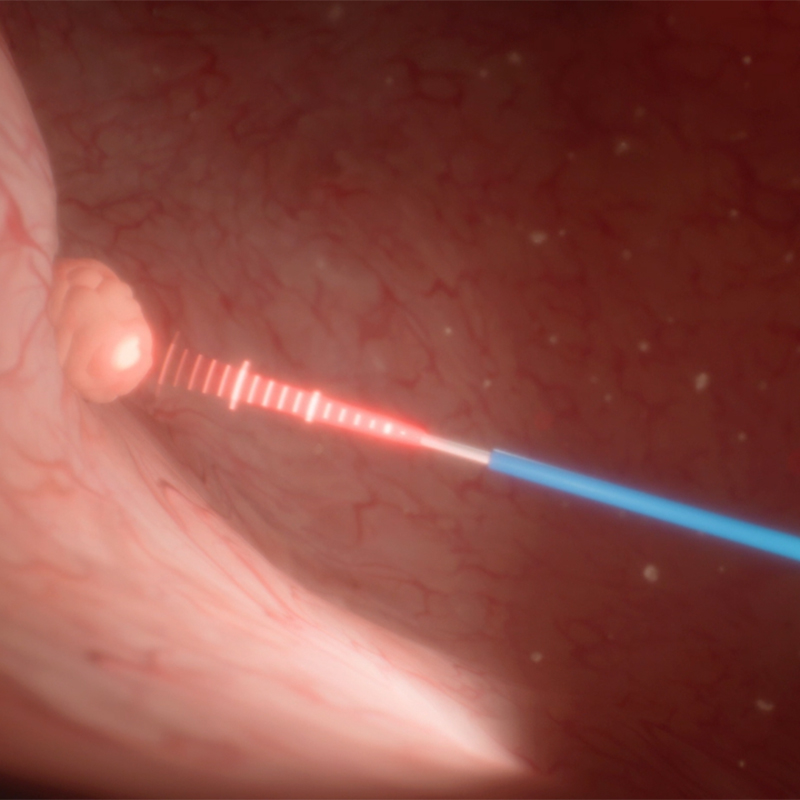
An intuitive, visible guide beam that communicates system readiness by alerting the operator when the laser is positioned in range of the target tissue. The guide beam would project the expected treatment zone directly on the tissue.
WideBeam™ technology
Our design incorporates a laser spot size up to 25 times larger than other conventional medical lasers, while being highly flexible for manoeuvrability.1,2
Automatic Irradiance Control (AIC™)
The AIC™ system is designed to monitor the distance between the laser fibre and the bladder wall, to adjust the power in real-time and help support uniform treatment.
microFLASH™ technology
Our microFLASH technology aims to keep the laser effects primarily confined to the bladder surface, with low penetration - to target the tumour and its microvasculature while helping to reduce risk of deeper tissue involvement.


Deliver
laser photocoagulation with ATLAS
Instead of targeting water, ATLAS’ wavelength targets haemoglobin in the blood vessel network of the tumour. This specialised mechanism of action for tumour photocoagulation is backed by Level 1 clinical evidence from a RCT that is referenced in the European Association of Urology guidelines.3,4
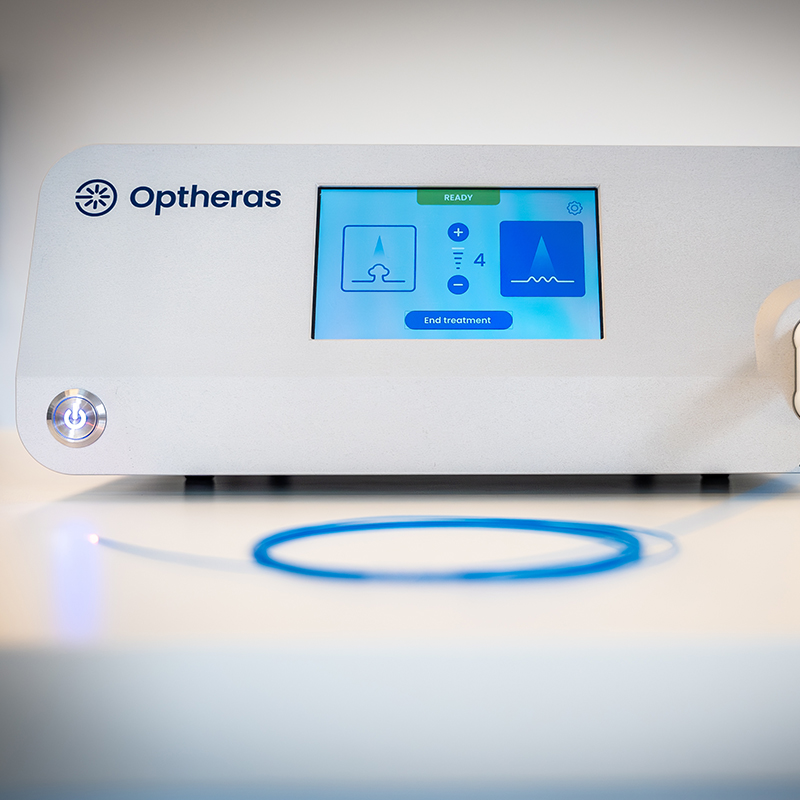
Developed with urologists, for urologists
Working in close collaboration with clinical teams, our technology is being built around the real day-to-day needs of clinicians.
